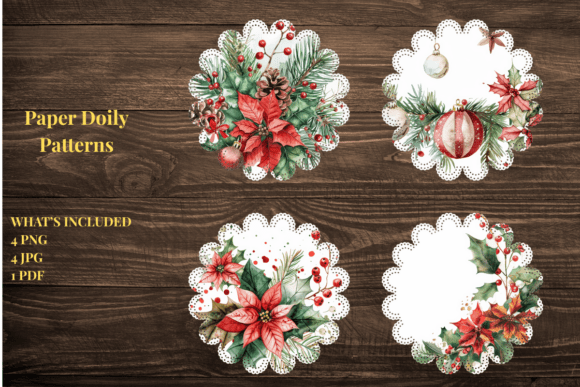
Review: Christmas Paper Doily Patterns for Embroidery
When I first opened the Christmas Paper Doily Patterns file, my immediate reaction was a mix of nostalgia and practical design assessment. As someone who has spent years evaluating digital assets for both personal hobby projects and commercial client work, I look past the pretty preview image to see how the design actually behaves under the needle. This isn't just another generic holiday clipart; it is a structured machine embroidery design that requires specific handling to truly shine. If you are an Etsy seller, a boutique owner, or a serious crafter looking to add a touch of vintage elegance to your holiday inventory, understanding the nuances of this pattern is crucial before you commit to production.
The First Impression: Mood and Visual Personality
The visual personality of these patterns leans heavily into traditional, old-world charm. The intricate lace-like geometry mimics the delicate paper cutouts often found on grandmother’s mantels or inside antique greeting cards. For a designer, this creates an immediate emotional connection with the end-user. It feels cozy, refined, and distinctly seasonal without being loud or overly commercial.
From a layout perspective, the design relies on negative space as much as positive stitch area. This is where many beginners make mistakes. They assume more fill means more value, but in this case, the beauty lies in the airy, openwork structure. When digitized correctly, this translates to a lightweight, breathable finish that drapes naturally over fabric rather than creating a stiff, plastic-like patch. It suggests a high-end handmade product rather than a mass-produced novelty item.
Real-World Application: Where This Design Shines
I recently tested this pattern while preparing a batch of custom gifts for a local holiday market, specifically focusing on kitchen towel and apron designs. The results were telling. Because the Christmas Paper Doily Patterns feature fine, interconnected lines, they perform exceptionally well on stable, woven fabrics like cotton duck linen or high-quality flour sack towels.
Imagine placing a single, centered doily motif on the corner of a cream-colored tea towel. The contrast between the crisp white thread (or a deep burgundy for a pop of color) and the natural fabric texture elevates the item from a simple kitchen tool to a keepsake. This is exactly the kind of personalized gift that drives engagement on social media and converts browsers into buyers on platforms like Etsy.
Beyond home goods, this design also holds its own in apparel decoration. I envision this working beautifully as a chest-level accent on a heavy-weight sweatshirt or even as a focal point on a denim jacket. However, the key here is scale. On a large garment, the doily pattern can serve as a sophisticated alternative to a giant Santa graphic. It appeals to the customer who wants to celebrate the holidays with subtle style rather than overt branding. For custom apparel decorators, this offers a unique selling proposition: "Vintage Lace Holiday Wear."
Considerations for Small Business Merchandise
If you are building a brand around craft business items, consistency is everything. These patterns lend themselves well to a cohesive collection. You can use the same base doily shape but vary the thread colors—silver for snow, red for berries, green for pine—to create a full line of matching accessories. Think tote bag design sets, pillow covers, or even embroidered patch collections for backpacks. The versatility allows you to maximize the utility of a single purchase, which is a smart strategy for any small shop product creator.
Technical Performance and Stitch Behavior
Let’s talk about the mechanics. The stitch density in these files varies significantly depending on the specific variation of the doily. Some sections may require dense fill stitch areas to anchor the delicate lace, while others rely on long running stitch or satin columns to define the edges.
One critical aspect to monitor is the hoop size. Because these designs often have wide diameters to capture the full spread of the doily, you need a machine with a sufficiently large hoop. If you attempt to downscale this design too much, you risk losing the intricate details entirely. A common mistake I see is trying to shrink a complex lace pattern onto a tiny baby bodice. While technically possible, the result often looks muddy because the eye cannot distinguish the individual lace loops. Instead, reserve the smaller sizes for simpler, minimalist interpretations of the theme.
Another technical note involves the stabilizer. Due to the open nature of the design, you must use a high-quality tear-away or cut-away stabilizer to prevent the fabric from puckering during the stitching process. If the foundation shifts, those delicate satin stitch borders will distort, ruining the clean aesthetic that makes this design so appealing. Always test on scrap fabric first to ensure your tension settings are balanced.
Where to Exercise Caution
While this design is versatile, it is not a one-size-fits-all solution. There are several scenarios where Christmas Paper Doily Patterns might struggle:
- Stretchy Fabrics: Avoid using this on thin jersey knits or stretchy activewear unless you are using a strong knit stabilizer. The lack of structural backing in the lace areas can lead to distortion when the fabric stretches.
- Dark or Textured Fabrics: The fine details of a paper doily can get lost on dark backgrounds if the thread count isn't high enough. Similarly, on heavily textured fabrics like bouclé wool, the small stitches may disappear into the weave. Lighter, smoother fabrics are ideal.
- Curved Surfaces: Applying this to a cap or a curved hat brim requires advanced digitizing techniques to flatten the design. Without proper easing, the circular symmetry of the doily will warp, making it look misshapen.
- Frequent Washing: If you are producing commercial embroidery items that will undergo rigorous laundering, such as hospital scrubs or work aprons, the delicate threads may wear down faster than bold, solid shapes. Consider this for gift items rather than heavy-duty utilitarian gear.
Designer’s Checklist for Success
To ensure your final finished product meets professional standards, follow these practical steps before running a full production batch:
- Thread Color Contrast: Test your chosen thread colors against your actual fabric swatch. White thread on white fabric might look elegant, but it can be invisible in low light. Ensure there is enough contrast to highlight the lace structure.
- Black and White Mockup: Convert your design preview to grayscale. This helps you evaluate the balance of solid vs. empty space without the distraction of color. If the design looks unbalanced in black and white, it likely will in color.
- Inspect Small Details: Zoom in on the finest points of the doily. Are there any stray jumps or loose ends that could snag? Clean digitizing is non-negotiable for lace-style patterns.
- Confirm Licensing: Before listing any digital embroidery file or physical merchandise online, double-check the license agreement. Some creators allow personal use only, while others permit commercial sales up to a certain limit. Respecting intellectual property protects your reputation as an embroidery designer.
- Test Print Mockups: Use printable mockups to visualize the design on various products. Seeing the doily on a tote bag versus a pillow cover can help you decide which design assets offer the best ROI for your customers.
Final Verdict
Christmas Paper Doily Patterns is a sophisticated addition to any embroidery library. It bridges the gap between traditional craft aesthetics and modern digital convenience. For the right project—whether it’s a heartfelt holiday embroidery gift or a chic boutique accessory—it delivers exceptional visual appeal and perceived value. By respecting the technical requirements of stitch density, fabric choice, and stabilization, you can transform this digital file into a tangible piece of art that customers will cherish. Just remember: the devil is in the details, and with lace, precision is everything.